

Contrary to popular belief, Lorem Ipsum is not simply random text. It has roots in a piece of classical Latin literature from 45 BC, making it over 2000 years old.
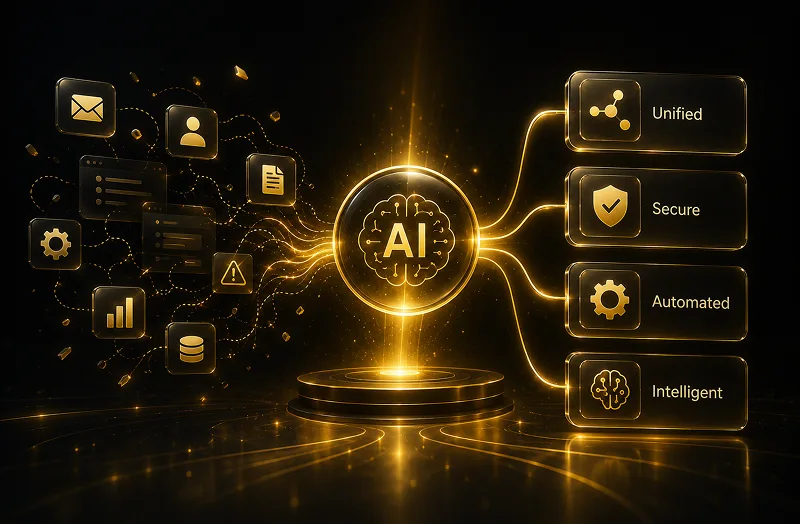
Enterprise artificial intelligence is facing a fundamental bottleneck: it cannot finish the job. Major software providers aggressively ship AI capabilities embedded exclusively within their own applications. This creates a highly fragmented operational layer where tools function in compartmentalized isolation, blind to adjacent departments or external systems.
While Large Language Models (LLMs) bring intelligence to the problem by generating answers, summarizing text, or answering queries, they do not inherently connect to a governed enterprise platform. They operate outside the context of corporate approval chains, explicit security permissions, immutable audit trails, and cross-system workflows that enterprise work requires. Consequently, workforce productivity remains stalled; employees are forced to manually bridge the gap by toggling between disconnected applications, chasing down operational approvals, and routing their own service requests. AI costs continue to rise, and productivity gains remain elusive.
Announced at Knowledge 2026, ServiceNow Otto addresses this operational divide. Developed by combining the foundational capabilities of Now Assist, Moveworks, and advanced AI Experience layers, ServiceNow Otto establishes a unified, horizontal AI interface across the entire enterprise.
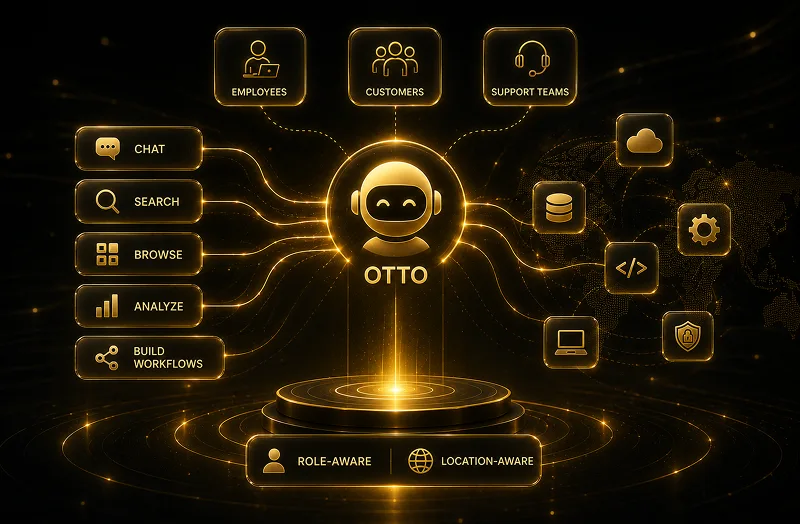
Instead of being trapped inside a single application silo, this architecture acts as an intelligent overlay across all systems. It deciphers complex user intent, identifies the correct backend destination, and executes the underlying task to full completion.
Employees, customers, and internal support teams can converse, chat, search, browse, analyze data, and build workflows naturally. The system dynamically adapts to the user's explicit role and geographic location, removing the requirement for individuals to understand which specific backend application handles their request.
ServiceNow Otto bridges multimodal human communication with autonomous cross-system execution through four primary architectural features:
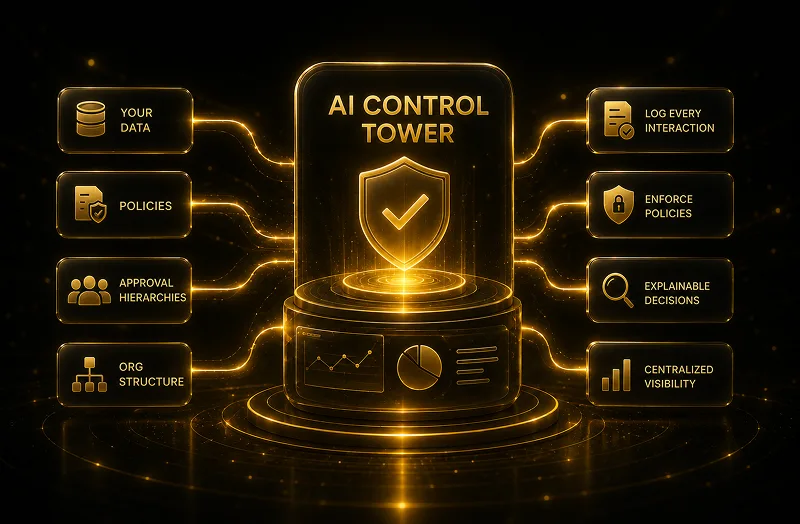
Speed and capability without structural guardrails introduce severe risk. To maintain absolute operational integrity, actions executed by ServiceNow Otto are grounded directly in a customer's specific data, corporate policies, predefined approval hierarchies, and organizational structure.
This governance is managed via the AI Control Tower, which provides centralized visibility. The AI Control Tower logs every single AI interaction, enforces enterprise policies, and provides clear explainability for every machine-driven decision.
The market rollout highlights the business appetite for this integrated approach. Initially deployed through ServiceNow EmployeeWorks and managed via the AI Control Tower, the platform is seeing immediate commercial adoption. Just one month after launch, EmployeeWorks powered by ServiceNow Otto generated six distinct deals exceeding $1 million each in net new annual contract value (NNACV). This rapid scale emphasizes a clear market truth: when enterprise AI is grounded in enterprise context and completes real work, people adopt it.
Global innovators are leveraging this blueprint to transform their internal operations. For instance, Siemens AG uses this conversational infrastructure to eliminate administrative friction for its workforce. By embedding conversational AI directly into the employee ecosystem, they deliver seamless IT support and instant company communications, preserving institutional knowledge and ensuring the workforce stays focused on delivering exceptional outcomes.
The definitive value of artificial intelligence is no longer measured by a model’s isolated intelligence quotient, but by its capacity to securely interact with the real world and execute tasks end-to-end. By eliminating the architectural barriers dividing frontend interaction from cross-system execution, ServiceNow Otto transitions the enterprise out of the experimentation phase. Mirroar leverages this unified runtime environment to help companies deploy an AI experience where employees ask, and ServiceNow Otto handles the rest within the guardrails the enterprise requires.


