

Contrary to popular belief, Lorem Ipsum is not simply random text. It has roots in a piece of classical Latin literature from 45 BC, making it over 2000 years old.
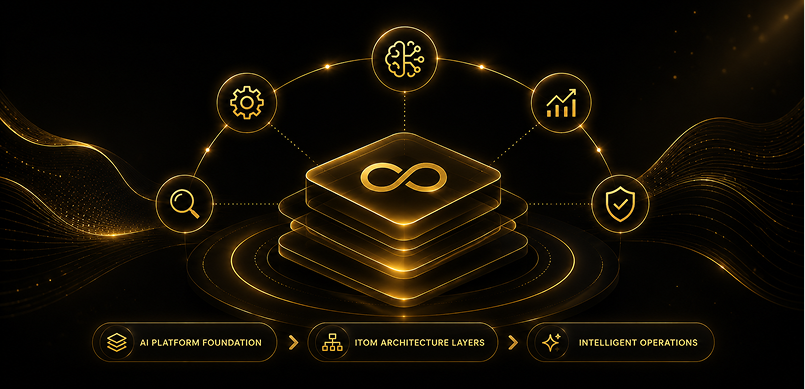
The modern enterprise infrastructure landscape has officially scaled beyond human management. Between multi-cloud migrations, ephemeral Kubernetes workloads, serverless nodes, and thousands of interconnected microservices, the volume of raw operational telemetry is overwhelming. IT operations teams are no longer just managing infrastructure—they are fighting a losing battle against data noise.
The traditional, reactive model of IT operations is fundamentally broken. Running disconnected monitoring point solutions for cloud resources, local networks, and software environments creates severe blind spots. When a critical application crashes, engineers are stuck in an operational war room, manually tracking disparate alerts while trying to guess the underlying root cause.
To achieve true business continuity, enterprises must move past siloed infrastructure monitoring and establish a unified, service-centric architecture. Backed by the major updates across recent release cycles—including the Xanadu, Yokohama, Zurich, and Australia families—ServiceNow IT Operations Management (ITOM) serves as the automated nervous system of the digital enterprise.
At Mirroar, we partner with organizations to replace chaotic firefighting with a proactive, self-healing infrastructure model. Here is an architectural deep dive into how the ServiceNow ITOM suite unifies visibility, health, and optimization to power autonomous enterprise workflows.

An operations center cannot protect, monitor, or optimize what it cannot see. The foundational layer of any robust ITOM architecture is comprehensive, real-time configuration tracking.
In the modern platform architecture, ServiceNow has shifted definitively away from legacy, static configuration databases, moving instead toward a dynamic, service-aware representation of the enterprise ecosystem managed within the Discovery Admin Workspace and the Service Graph Workspace.
Elevated Workspace Tuning and Content Scaling
Managing data discovery across massive estates used to be a heavily fractured task. Through the Discovery Admin Workspace, infrastructure architects gain a single command center to configure scanning schedules, run diagnostic checks, and analyze performance insights. Furthermore, the ITOM Content Service constantly enriches your configuration repository with standard software and hardware data signatures, allowing the platform to recognize thousands of unique technical models out of the box.
Service-Aware Mapping and Application Fingerprints
A major challenge with automated infrastructure mapping has always been "alert noise"—the platform ingesting thousands of non-operational background scripts that cloud the actual service map. ServiceNow resolves this through machine learning-driven capabilities, such as application fingerprints. The platform automatically isolates key application candidates, allowing administrators to establish clean, precise relationship paths between physical hardware, cloud instances, and the critical business services they support.
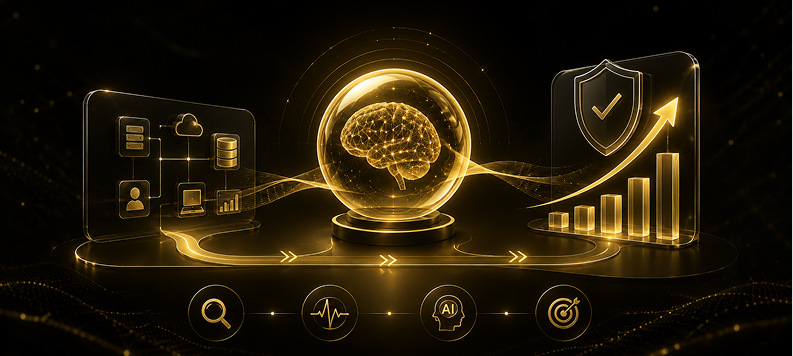
Once an enterprise establishes clean infrastructure visibility, the architecture moves up the maturity curve to ITOM Health. This layer is responsible for converting massive streams of raw metric logs and event configurations into actionable, predictive signals.
Instead of flooding engineering channels with hundreds of isolated alerts during an operational disruption, ServiceNow’s built-in AIOps engines correlate events right where they run.
The Unified Service Operations Workspace (SOW)
The modern operations hub centers entirely on the Service Operations Workspace. This single configurable workspace unifies IT Service Management (ITSM) and ITOM onto a singular screen. When an infrastructure component flags an anomalous metric, the system maps the incident directly against its corresponding application topology. Technicians immediately see the full blast radius of an infrastructure issue, identifying exactly which business segments or customer-facing applications are impacted before a total outage occurs.
Generative AI Analysis with Now Assist for ITOM
Pinpointing root causes is dramatically accelerated via Now Assist for ITOM. Instead of requiring a human operator to spend hours digging through thousands of lines of raw system logs, native generative AI models analyze the telemetry in real time. Now Assist extracts the core anomaly, correlates it against recent change logs or deployment events, and synthesizes a natural-language summary explaining what failed, why it failed, and what steps are required to remediate the disruption immediately.
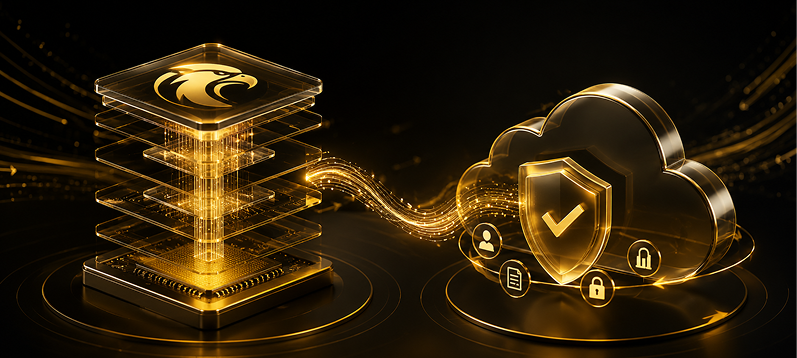
To support the immense data processing speeds demanded by modern, high-frequency digital operations, ServiceNow has reengineered its underlying data platform capabilities.
Autonomous Remediation via ServiceNow Otto
Underneath this performance layer sits ServiceNow Otto and the advanced autonomous AI agent framework. Managed and monitored through the centralized AI Control Tower, these specialized digital assistants track infrastructure health thresholds continuously. When a standard, pre-approved configuration exception occurs—such as a cloud instance running low on temporary storage—the autonomous agents utilize integration workflows to execute self-healing actions, correcting the fault and logging the tracking incident completely untouched by human clicks.
Ultra-Scale Performance with RaptorDB
By upgrading to RaptorDB, the ServiceNow AI Platform unifies transactional and analytical processing into a high-performance database engine. This architecture handles data retrieval up to 10x to 27x faster than legacy backend frameworks. For ITOM teams, this means billions of telemetry records, operational logs, and infrastructure updates are indexed and queried in parallel, ensuring the real-time health dashboards remain fully performant under immense scale.
Structural Optimization and Cloud Provisioning
The final layer of the architecture focuses on keeping the enterprise footprint highly efficient. Through ITOM Optimization and the Cloud Provisioning and Governance workspace, teams can deploy enterprise-compliant, secure multi-cloud environments. The platform monitors real-time cost analytics and instance utilization, ensuring that unmapped, idle, or unoptimized cloud resources are flagged for automatic reclamation, driving down unnecessary corporate technology spend.
At Mirroar, we know that deploying a world-class ITOM architecture requires a strategic, phased approach. Simply activating data discovery without structuring your configuration model will result in operational clutter.
Our professional consulting practice ensures your ITOM infrastructure is engineered for long-term clarity and scale:
You cannot manage a cutting-edge digital enterprise using fragmented, backward-looking monitoring tools. In an era where system downtime directly compromises corporate revenue, IT operations must move at machine speed.
By unifying your enterprise footprint on the ServiceNow ITOM platform, you bridge the gap between infrastructure visibility and automated resolution. You equip your technology teams with the predictive intelligence, high-performance database speeds, and autonomous execution capabilities required to isolate system vulnerabilities early, eliminate operational friction, and keep your business running smoothly 24/7.


