Deploying Kimi K3 on Amazon SageMaker HyperPod and Amazon EKS
As open-weight foundation models advance in reasoning depth and context window length, enterprise engineering teams face a crucial architectural challenge: how to host these massive models reliably without incurring ballooning infrastructure costs or operational friction. High-capability systems like Kimi K3 demand exceptional GPU memory efficiency, ultra-fast inter-node networking, and resilient orchestration. That is why deploying Kimi K3 on Amazon SageMaker HyperPod and Amazon EKS has emerged as a premier blueprint for organizations scaling enterprise-grade generative AI infrastructure.
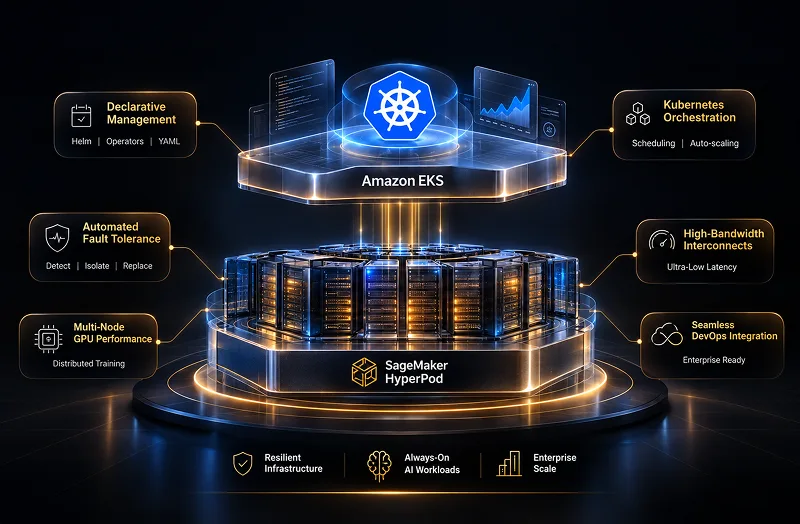
By pairing the self-healing, multi-node compute capabilities of SageMaker HyperPod with the familiar container management of Amazon Elastic Kubernetes Service (Amazon EKS), teams achieve the ideal balance of bare-metal performance and cloud-native flexibility. In this comprehensive guide, we explore the strategic advantages of this dual architecture, walk through the key operational layers, and share best practices for optimizing inference throughput at scale.
Architectural Foundation: Why Combine HyperPod Precision with EKS Flexibility?
Running frontier-class models like Kimi K3 across dozens or hundreds of distributed GPU nodes introduces physical hardware risks that traditional cloud clusters struggle to handle gracefully. A single transient GPU fault or memory degradation issue can halt an entire training run or disrupt live customer inference traffic.
Automated Fault Tolerance at Scale
SageMaker HyperPod continuously monitors the underlying hardware health across the GPU cluster. If a memory failure or hardware degradation is detected on a specific node, HyperPod automatically isolates the faulty hardware, replaces the node, and restores workload state without requiring manual administrative intervention.
Declarative Container Management via Kubernetes
While HyperPod manages low-level infrastructure resilience, Amazon EKS handles workload orchestration. Engineering teams can deploy Kimi K3 using standard Helm charts, Kubernetes operators, and declarative YAML manifests, ensuring seamless integration with existing enterprise DevOps pipelines.
Key Elements for Deploying Kimi K3 Successfully
Deploying ultra-large foundation models requires careful coordination across storage, memory optimization, and network interconnectivity.
High-Throughput Model Weight Streaming
Kimi K3 requires rapid loading of massive parameter files across all cluster nodes during startup or auto-scaling events. By coupling high-speed Amazon FSx for Lustre storage with local caching strategies, we eliminate I/O bottlenecks and drastically reduce pod initialization times.
Optimized Inference Runtime Configurations
To maximize GPU utility and lower per-token latency, production deployments leverage modern serving frameworks such as vLLM or TensorRT-LLM. These runtimes implement advanced memory management techniques:
Operations & Observability: Maintaining Steady State
Once Kimi K3 is running in production, enterprise teams must implement continuous operational controls to track performance and control infrastructure expenditures.
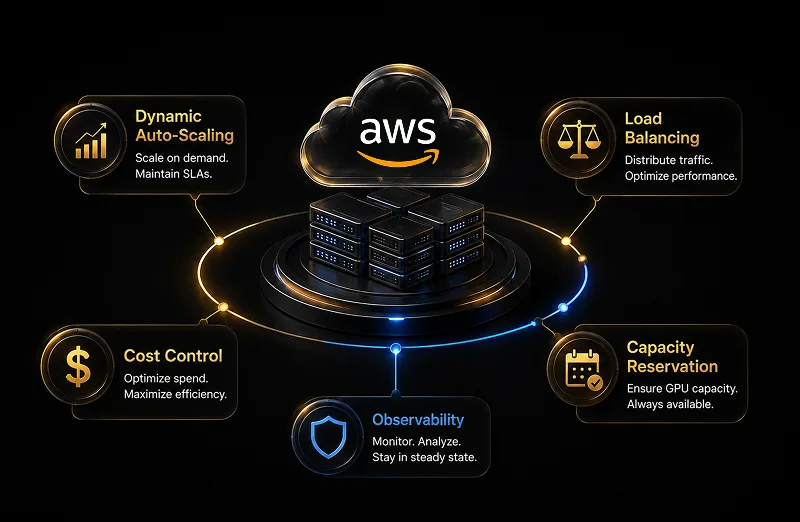
Dynamic Auto-Scaling and Load Balancing
Using Kubernetes Metrics Server alongside custom Prometheus metrics (such as queue depth and GPU memory utilization), teams can establish automated horizontal scaling policies. As prompt traffic surges, additional pod replicas spin up dynamically across pre-warmed HyperPod instances to maintain strict SLAs.
Cost Control and Capacity Reservation
GPU capacity is a premium enterprise resource. Utilizing AWS On-Demand Capacity Reservations alongside HyperPod’s instance management ensures that critical workloads always have access to required compute, while non-production testing environments can leverage cost-effective spot configurations where appropriate.
- External Linking Opportunity: Review global standards for cloud cost optimization and infrastructure governance in the [FinOps Foundation Framework for Cloud Financial Management].
Key Takeaways
- Resilience Meets Orchestration: Combining SageMaker HyperPod's automated hardware recovery with Amazon EKS's Kubernetes control plane creates a robust, self-healing platform for large-scale models.
- Infrastructure Optimization Is Essential: Utilizing AWS Elastic Fabric Adapter (EFA) and dynamic memory caching significantly reduces inter-node latency and maximizes concurrent user throughput.
- DevOps Workflow Integration: Leveraging Amazon EKS allows teams to manage Kimi K3 deployments using familiar declarative tools, Helm charts, and GitOps workflows.
- Proactive Cost Management: Coupling custom performance metrics with capacity reservations ensures predictable infrastructure costs while meeting strict customer SLAs.
Scale Your Generative AI Infrastructure with Confidence
Deploying Kimi K3 on Amazon SageMaker HyperPod and Amazon EKS provides enterprise teams with a reliable, scalable foundation for next-generation AI applications. By insulating workloads from hardware failures and streamlining Kubernetes orchestration, we help organizations move from experimental prototypes to production-ready deployments efficiently.
Ready to optimize your large-scale AI deployment strategy? Contact our team of AWS solutions architects today to audit your compute infrastructure and design high-throughput inference pipelines.