

Contrary to popular belief, Lorem Ipsum is not simply random text. It has roots in a piece of classical Latin literature from 45 BC, making it over 2000 years old.

For years, customer operations teams have proudly claimed the title of "multi-channel." They opened up communication pipelines across email, live web chat, SMS, phone support, and messaging portals like WhatsApp.
But behind the scenes, this multi-channel approach created a highly fragmented operational reality. Because these separate communication paths run on disconnected backend architectures, a customer who starts an inquiry via an online portal on Monday is often forced to retell their entire story from scratch when following up over the phone on Wednesday.
This model forces human agents to function as manual data routers—frantically copying text between communication screens, siloed legacy interfaces, and backend databases just to piece together a single customer timeline. According to official ServiceNow consumer insights, the modern customer places a massive premium on speed, accuracy, and clear paths to resolution. When workflows are fragmented, meeting those expectations becomes an uphill battle.
True omnichannel engagement is entirely different. It requires unifying every point of contact into a centralized, contextual workspace where the conversation history moves with the customer across channels. Supported by the native features consolidated across recent ServiceNow release families, ServiceNow Customer Service Management (CSM) provides the core engine needed to bridge the gap between interaction channels and immediate operational resolution.
At Mirroar, we help enterprises transform scattered communication channels into high-performance, unified customer ecosystems. Here is how ServiceNow’s architecture redefines customer engagement and how platform leaders can leverage it to drive measurable ROI.
Traditional customer management tools excel primarily at recording interactions—they log that a customer reached out and summarize what they complained about. However, these applications are structurally decoupled from the operational backend systems that actually fulfill requests, such as logistics, billing infrastructure, or IT environments.
ServiceNow CSM breaks down these internal walls by leveraging a unified enterprise data model. The platform binds frontend interaction channels directly to middle-office workflows and backend technical departments.
When a customer submits an inquiry, the platform does more than log a ticket. It initiates intelligent workflows that cross internal departmental boundaries. If an account issue requires a billing adjustment from finance, a parts delivery from field service, or a technical patch from IT, the work is routed within the same system of action. Because every task ties back to a singular customer case, agents maintain total visibility into the resolution lifecycle, regardless of which communication path the customer chooses to use next.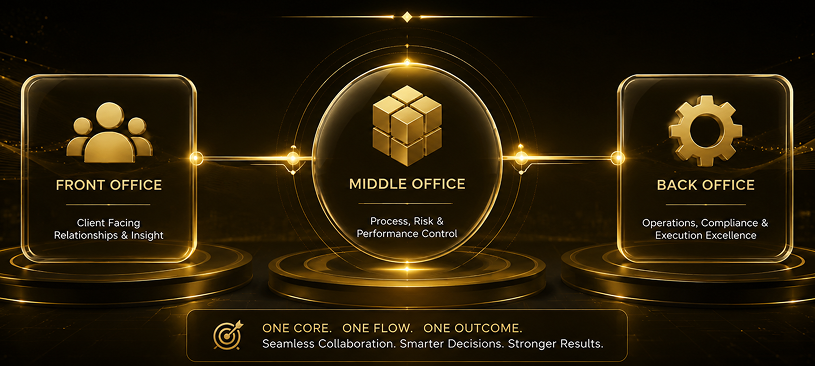
With the continuous expansion of the ServiceNow AI Platform, customer service has shifted from reactive case tracking into automated, intelligent execution. Modern operations teams utilize several native capabilities within the CSM suite to manage high-volume interactions seamlessly:
Unified Agent Workspaces and 360-Degree Views Frontline personnel no longer waste time hunting through multiple applications for basic account history. Through centralized service workspaces, agents are presented with a complete view of the customer journey on a single screen. This interface aggregates previous conversation transcripts from all incoming channels, active service contracts, product entitlements, and historical cases, allowing agents to deliver contextual, personalized resolutions immediately.
Intelligent Routing via Advanced Work Assignment (AWA) Distributing high volumes of customer inquiries across global teams requires precise operational management. ServiceNow’s Advanced Work Assignment (AWA) engine optimizes work distribution by continuously evaluating routing signals for every incoming chat, email, message, or case. AWA automatically sends the work to the right internal or external agent based on real-time factors:
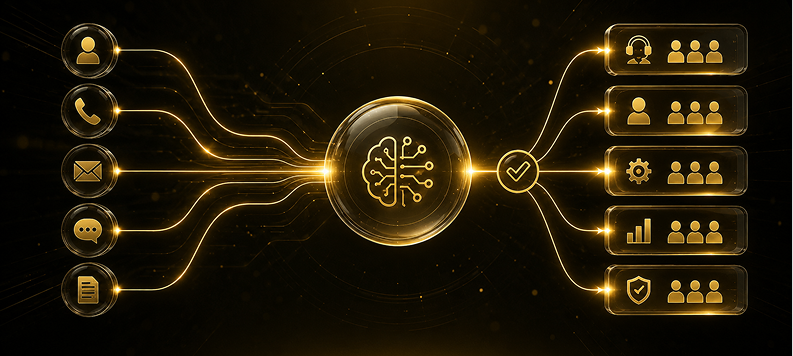
Omnichannel Callback for CSM One of the traditional flashpoints for customer frustration is the transition from digital self-service to a voice queue. Features like Omnichannel Callback for CSM natively bridge this gap. Instead of forcing customers to wait on hold on a voice channel when an automated chat escalates, the system schedules precise, automated callbacks. It passes the complete self-service text history and technical context directly to the assigned agent's workspace before the call connects, completely eliminating the need for the customer to repeat themselves.
Native Virtual Agents and Conversational Self-Service Deflecting routine transactional inquiries requires highly accessible self-service alternatives. ServiceNow’s conversational Virtual Agents allow customers to independently check order statuses, track open service requests, or resolve common issues 24/7. These capabilities can be embedded directly onto external corporate portals or mobile apps using ServiceNow Engagement Messenger, allowing users to find answers on their own terms without placing additional strain on human support queues.
Proactive Customer Service and Predictive Intelligence The most efficient customer service interaction is the one that never has to happen. By connecting CSM with Event Management and predictive monitoring, ServiceNow tracks the live operational health of customer-facing products and services. If an infrastructure node experiences unexpected latency or an active system flags a disruption, the platform automatically triggers a proactive case. The system can then alert impacted accounts via their preferred channels and initiate background remediation workflows to fix the underlying fault before customers even realize an issue occurred.
At Mirroar, we know that successful customer engagement depends entirely on your foundational data hygiene. If your backend service models are disorganized or your core workflows are disconnected, adding digital communication channels will simply broadcast operational mistakes at a faster pace.
Our consulting practice follows a rigorous path to establish long-term service resilience:
Attempting to run a high-velocity enterprise using disjointed customer service tools leaves your operations exposed to communication gaps, slow resolution times, and frustrated users.
By anchoring your engagement strategies within ServiceNow Customer Service Management, you eliminate communication boundaries entirely. You equip your frontline specialists, backend engineers, and self-service virtual tools with the real-time, shared context required to identify customer friction early, execute resolutions instantly, and protect your brand's bottom line.


