

Contrary to popular belief, Lorem Ipsum is not simply random text. It has roots in a piece of classical Latin literature from 45 BC, making it over 2000 years old.
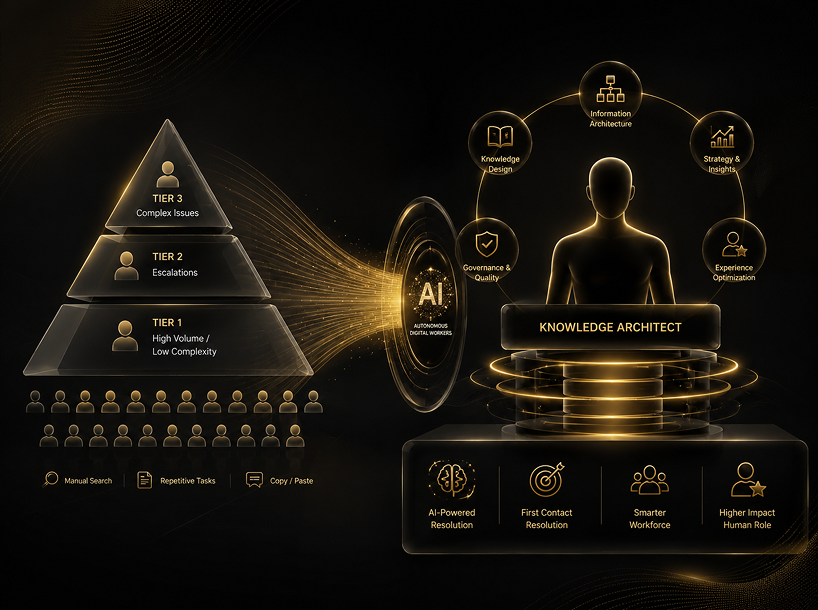
For decades, the traditional enterprise service desk operated on a rigid, assembly-line pyramid model. At the bottom sat the Tier 1 service agents—the frontline workers tasked with absorbing high-volume, low-complexity stress. Their days were defined by manual triage, basic keyword searches, password resets, and copying text from outdated articles into active message windows.
But as we advance through 2026, that traditional tier model has completely collapsed.
With generative AI natively woven across every layer of enterprise architecture, the baseline has fundamentally shifted. Platforms like ServiceNow Now Assist are no longer premium add-ons; they are embedded core infrastructure capable of resolving routine issues, summarizing tangled message histories, and executing end-to-end tasks on the first contact.
Because autonomous digital workers now intercept the vast majority of repetitive transactional toil, the necessity for a traditional Tier 1 triage layer is disappearing. The humans remaining on the support team are pivoting away from routine operational execution and stepping into a far more strategic role: The Knowledge Architect.
At Mirroar, we help organizations navigate this structural workforce shift. Here is how the latest platform features are redefining tech support and why training your staff to manage information architecture is your ultimate retention and efficiency strategy.
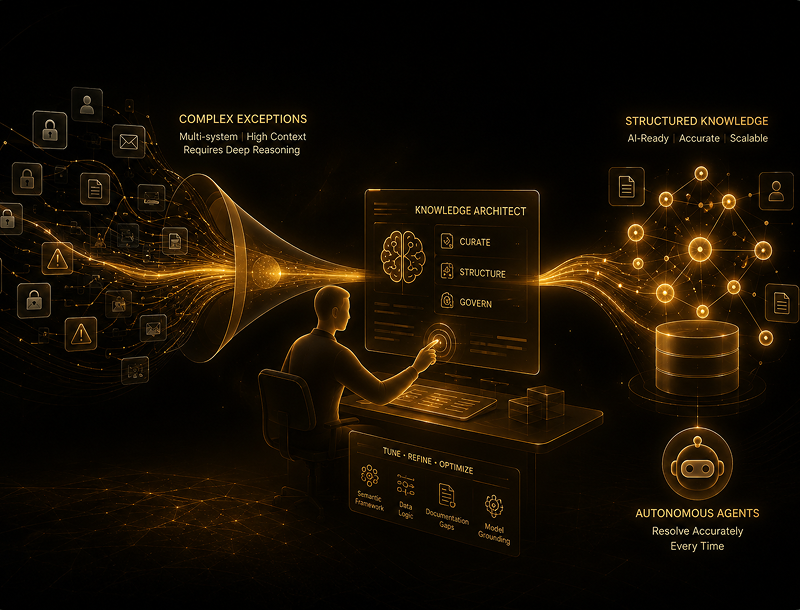
When routine, transactional tickets disappear into automated self-service streams, the incoming queue changes dramatically. The human service desk is no longer flooded with simple password requests. Instead, they receive highly complex, multi-system exceptions that require deep reasoning, contextual troubleshooting, and cross-department governance.
This means your frontline workers can no longer be evaluated on traditional metrics like average handle time or ticket closure velocity. Their new mandate is to curate, structure, and govern the organizational memory that feeds the AI engine itself.
If an autonomous digital agent misunderstands an employee's context—such as confusing an internal security access tier with an external billing classification—the human agent doesn't just patch the single ticket. As a Knowledge Architect, they dive into the system's semantic framework, tune the data logic, resolve documentation gaps, and refine the model's grounding parameters so the automated worker handles it perfectly next time.
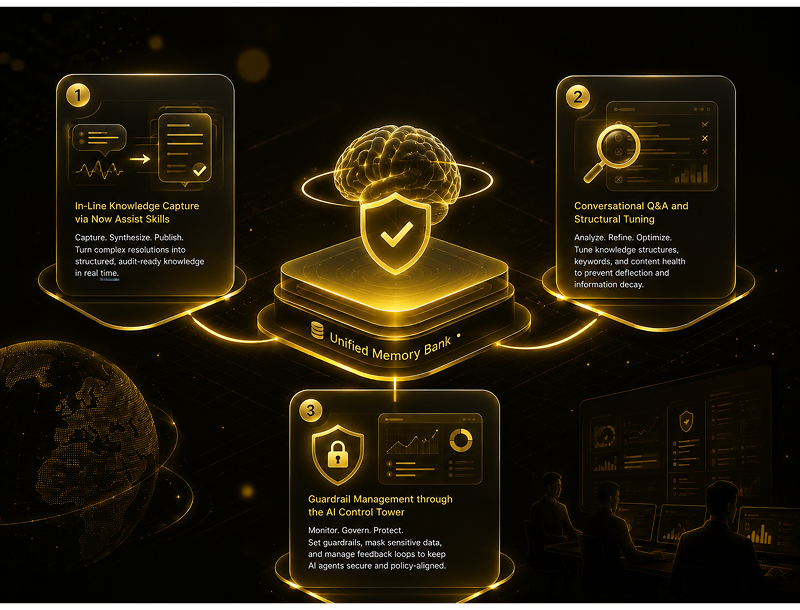
Transitioning staff from administrative task workers to information engineers requires a platform built explicitly for data curation and observability. ServiceNow provides this foundation through several core capabilities:.
In-Line Knowledge Capture via Now Assist Skills
Knowledge creation is no longer a separate, tedious administrative step. As senior technicians resolve complex operational anomalies, Now Assist automatically tracks the resolution patterns, chat flows, and technical telemetry in real time. With one click, the system synthesizes these complex events into a structured, audit-ready draft article. The technician acts as an editor, validating the logic and publishing the data into the enterprise memory bank immediately.
Conversational Q&A and Structural Tuning
Modern service desks utilize inline context search engines to probe deep system parameters. Knowledge Architects leverage advanced administrative consoles to analyze why automated virtual agents may have deflected or failed specific end-user prompts. This visibility allows support staff to proactively alter information categorizations, expand localized keyword mapping arrays, and weed out contradictory articles before data rot impacts performance.
Guardrail Management through the AI Control Tower
As frontline teams evolve into information governors, they assume greater security responsibilities. Using the unified AI Control Tower workspace, staff track performance indicators across all live digital workers. They help set semantic boundaries, ensure sensitive corporate data is appropriately masked during model interactions, and manage the feedback loops that keep autonomous agents operating safely within established company policies.
At Mirroar, we know that migrating away from the legacy Tier 1 model is primarily a cultural and operational transformation. If you don't upskill your technicians to think like system architects, your AI investments will quickly plateau due to poor data grounding.
Our advisory practice implements a clear pathway to transition your frontline teams:
The standard assembly-line service desk is an outdated concept. Attempting to manage modern, high-velocity IT operations using humans as manual data routers creates massive operational bottlenecks and limits employee growth.
By embracing the death of Tier 1 and transitioning your frontline workers into ServiceNow Knowledge Architects, you unlock the true ROI of your enterprise automation investments.
You transform your support desk from a cost center focused on clearing queues into a high-value engineering team that continuously optimizes, secures, and scales your organization's digital brain.


