ServiceNow Brazil Release: Features, Best Practices, and Roadmap Execution
The ServiceNow Brazil release introduces pivotal advancements built on the ServiceNow AI Platform, transforming how enterprise teams plan, build, isolate, debug, and govern applications. As early availability rolls out, developers shift from working alongside AI to supervising autonomous build workflows. To maximize platform return on investment (ROI), enterprise leaders must look beyond basic release notes and establish a disciplined, governance-first deployment strategy.
Capabilities of the ServiceNow Brazil Release
Official documentation and developer releases highlight transformative tools across the lifecycle:
- Autonomous Engineer and Build Agent: Operating on top of Build Agent, Autonomous Engineer takes written specifications or uploaded prompts and interviews users to resolve ambiguities. It generates an approved implementation plan, executes work items concurrently, creates and runs Automated Test Framework (ATF) suites, and packages changes into update sets.
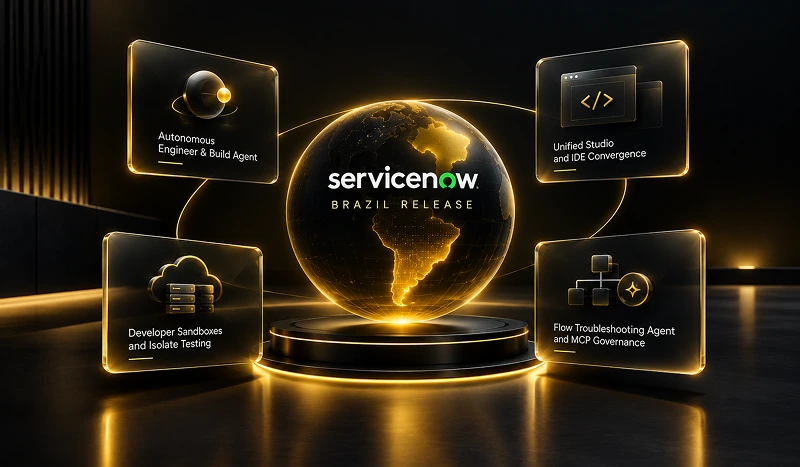
- Unified Studio and IDE Convergence: ServiceNow Studio and ServiceNow IDE merge into a unified developer workspace. Build Agent integrates directly with the code-first ServiceNow Fluent toolchain, ensuring hand-written and AI-generated metadata share a single TypeScript-based declarative representation.
- Developer Sandboxes and Isolate Testing: The Brazil release introduces pre-provisioned, isolated Developer Sandboxes, allowing parallel build streams without risking base instance stability or overwriting core update sets.
- Flow Troubleshooting Agent and MCP Governance: Operators gain access to the AI-assisted Flow Troubleshooting Agent for step-by-step diagnostics of broken automations, alongside Model Context Protocol (MCP) server integrations (such as Box) for secure tool connectivity.
Enterprise Best Practices for Brazil Feature Adoption
To deploy these capabilities safely, enterprise technology leaders should enforce the following operational guardrails:.
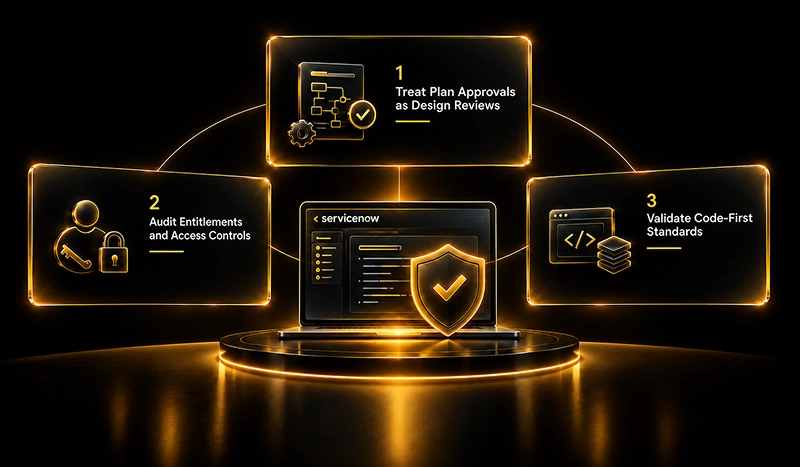
- Treat Plan Approvals as Design Reviews:Autonomous Engineer generates architectural work items. Before approving plans, architects must verify table extension logic, scope boundaries, role-based access control (RBAC), and naming standards.
- Audit Entitlements and Access Controls:Autonomous Engineer requires specific AI Workflow Factory licensing, while Build Agent operates strictly under administrative privileges. Organizations must establish clear governance for delegated-development models.
- Validate Code-First Standards:Ensure developers utilize the ServiceNow SDK and Fluent declarative structures to maintain Git-based source control across custom applications.
ServiceNow Brazil Success with Mirroar
Mirroar aligns advanced platform features directly with business outcomes through structured technical execution. By reviewing data architectures and refining CSDM frameworks, Mirroar helps enterprise teams adopt Autonomous Engineer and AI capabilities safely, eliminating technical debt while establishing scalable workflow governance.
Mirroar provides end-to-end consulting, seamless implementation, and proactive managed services to streamline your Brazil release upgrade. Our certified architects conduct comprehensive instance health audits, configure isolated sandboxes, and align platform releases with strict ServiceNow best practices to maximize platform ROI.
Conclusion
The ServiceNow Brazil release removes manual friction between requirements gathering and deployable update sets. However, AI efficiency does not replace executive accountability. By pairing platform innovation with Mirroar’s consultative deployment framework, enterprises protect system uptime while accelerating digital transformation.
Connect with Mirroar ServiceNow architecture team today to schedule your Brazil release assessment and upgrade strategy session.