ServiceNow Asset Management: Optimizing IT Lifecycle Costs and Compliance
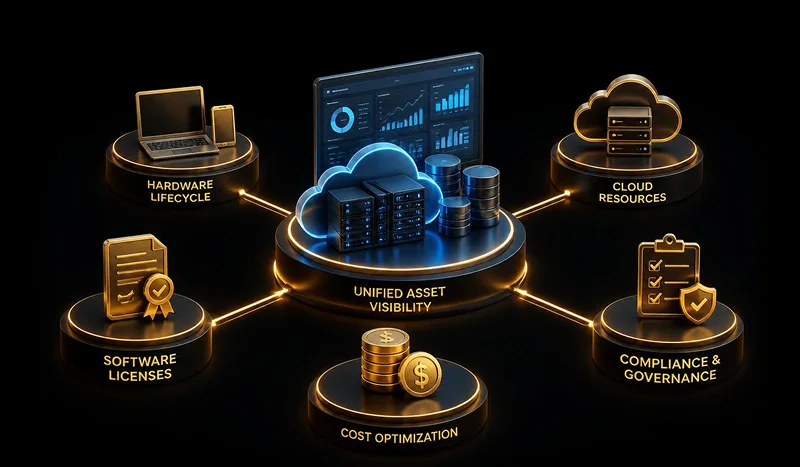
As enterprise infrastructure expands across multi-cloud environments, hybrid workforces, and thousands of end-user devices, keeping track of technology spend becomes an operational hurdle. Many organizations struggle with "ghost" assets, unallocated software licenses, and unexpected vendor audit penalties. Without visibility into what technology exists, where it resides, and who uses it, IT budgets drain silently every quarter.
Managing physical, cloud, and digital infrastructure requires moving beyond static spreadsheets and disconnected asset registries.
Leveraging
ServiceNow Asset Management: optimizing IT lifecycle costs and compliance provides a unified model to track hardware, software, and cloud resources from initial procurement to ultimate decommissioning. By linking financial, operational, and contractual data into a single pane of glass, enterprise leaders can eliminate waste, reduce compliance risks, and maximize technology investments.
In this guide, we explore why traditional IT Asset Management (ITAM) breaks down, how ServiceNow unifies hardware and software lifecycles, and the key strategies driving operational ROI.
The Cost of Fragmented IT Asset Tracking
In fast-growing organizations, IT procurement and lifecycle tracking frequently happen in departmental silos. Procurement buys licenses in one system, desktop support deploys hardware in another, and finance tracks depreciation on static spreadsheets.
The Blind Spots of Disconnected Asset Registries
When an organization lacks a centralized ITAM solution, invisible cost leaks multiply quickly:
- Unused Software Subscriptions (Shelfware): Organizations often pay monthly SaaS fees or enterprise license renewals for former employees or underutilized applications simply because no automated process reclaims them.
- Audit Penalties and Compliance Risk: Software vendors conduct unannounced compliance audits. Lacking centralized proof of entitlement and active deployment metrics often leads to unbudgeted true-up costs and penalties.
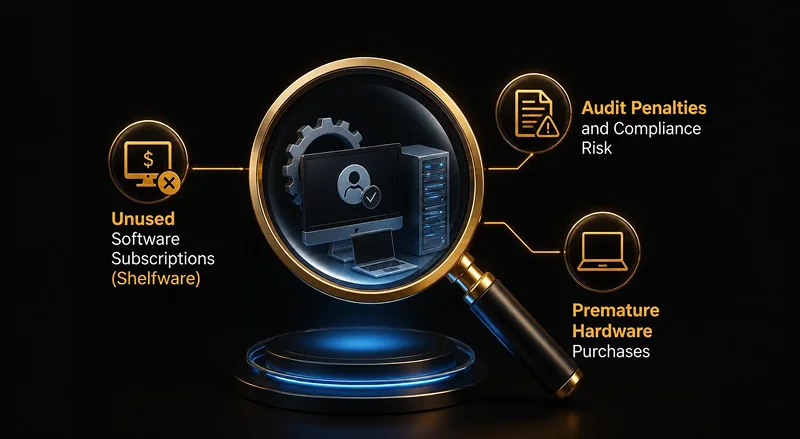
- Premature Hardware Purchases: Without real-time stockroom visibility, IT procurement orders new laptops for onboarding employees while functional, refurbished devices sit forgotten in local office storage closets.
Unifying the IT Lifecycle with ServiceNow ITAM
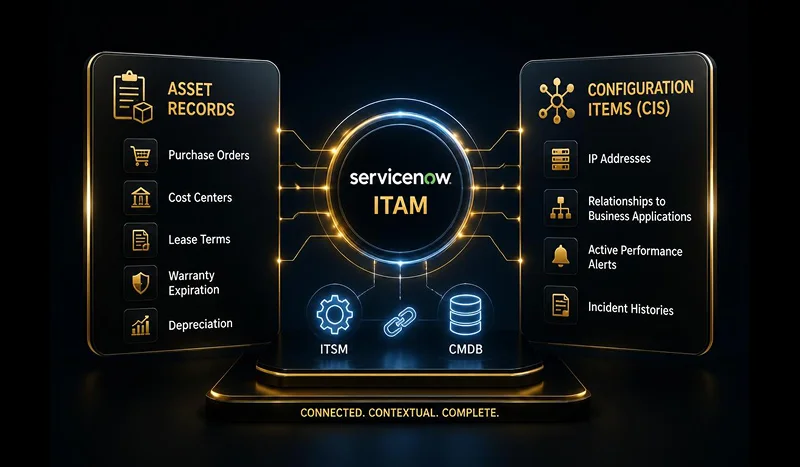
ServiceNow IT Asset Management bridges the gap between financial oversight and technical execution. Because it builds directly on the Now Platform, ITAM natively connects asset data with IT Service Management (ITSM) and the Configuration Management Database (CMDB).
Differentiating Assets vs. Configuration Items (CIs)
A common point of confusion in enterprise IT is the difference between an Asset record and a Configuration Item (CI):
- Asset Records: Focus on the financial, contractual, and physical lifecycle of an item, covering purchase orders, cost centers, lease terms, warranty expiration, and depreciation.
- Configuration Items (CIs): Focus on the operational role of an item, tracking IP addresses, relationships to business applications, active performance alerts, and incident histories.
ServiceNow automatically links these two perspectives. When a server experiences an operational issue (tracked via CIs), IT managers can instantly see its warranty coverage and vendor support terms (tracked via Assets) to decide whether to repair or replace it.
Key Capabilities Across the ServiceNow ITAM Suite
- Hardware Asset Management (HAM): Automates hardware lifecycles, from inventory stockroom tracking and asset assignment to lifecycle refresh planning and secure disposal documentation.
- Software Asset Management (SAM): Normalizes software entitlement records, compares purchased licenses against active deployments, and automatically calculates license compliance positions to prevent audit fines.
- Cloud Cost Management: Tracks cloud resource utilization across multi-cloud infrastructure (AWS, Azure, Google Cloud), flagging idle virtual machines and right-sizing underutilized cloud instances.
Practical Steps to Drive Immediate ITAM Value
Transitioning to an automated asset management model yields measurable financial and operational returns when executed strategically. At Mirroar, we recommend focusing on three practical milestones:
- Establish Automated Software Normalization: Manual license tracking across thousands of applications leads to errors. Leverage ServiceNow SAM's Content Library to automatically clean, normalize, and match raw discovery data with publisher entitlement rules.
- Implement Stockroom Automation and Refurbishment Workflows: Before placing vendor orders for new hardware, automate inventory workflows so that existing stockrooms check for available, reconditioned devices first during employee onboarding requests.
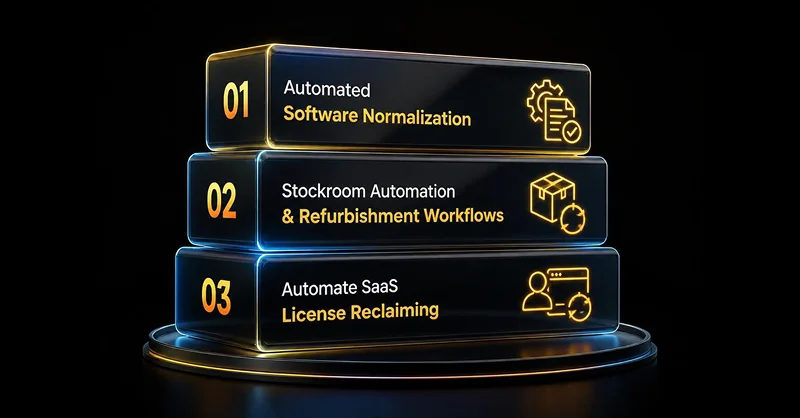
- Automate SaaS License Reclaiming: Set up automated usage triggers that detect when a user has not logged into a SaaS platform for 30 or 60 days. Automatically revoke and reallocate those licenses to reduce recurring subscription costs without manual intervention.
Transform Your IT Asset Strategy with Mirroar
Building a mature, cost-effective IT asset management program requires clear governance, automated workflows, and expert platform design across the ServiceNow ecosystem. Eliminating wasted technology spend and maintaining audit readiness are critical for driving operational resilience.
At Mirroar, we assist IT leaders and enterprise organizations in designing, implementing, and scaling ServiceNow solutions engineered to maximize technology ROI.
Ready to gain total control over your hardware, software, and cloud assets? Connect with our consultative advisory team at Mirroar today to schedule a comprehensive ITAM optimization assessment.