
Mirroar

From IT Tool to Enterprise Operating Model: Expanding Beyond ITSM

For years, IT Service Management (ITSM) served as the foundation for enterprise ticketing and request tracking. But confining ServiceNow strictly to IT operations leaves significant value on the table. When business units operate in disconnected silos, cross-departmental requests stall, operational visibility drops, and employee productivity suffers.

To build a modern ServiceNow enterprise operating model, forward-thinking organizations are expanding beyond ITSM into HR, Customer Service, Finance, and Legal. By establishing a unified workflow layer across the entire business, we transform isolated department tools into a single, high-velocity service architecture.

Breaking Down Silos Across Core Business Units

When cross-functional processes rely on email threads and custom spreadsheets, simple requests turn into lengthy administrative bottlenecks. Extending Enterprise Service Management (ESM) capabilities across business functions connects operations seamlessly:
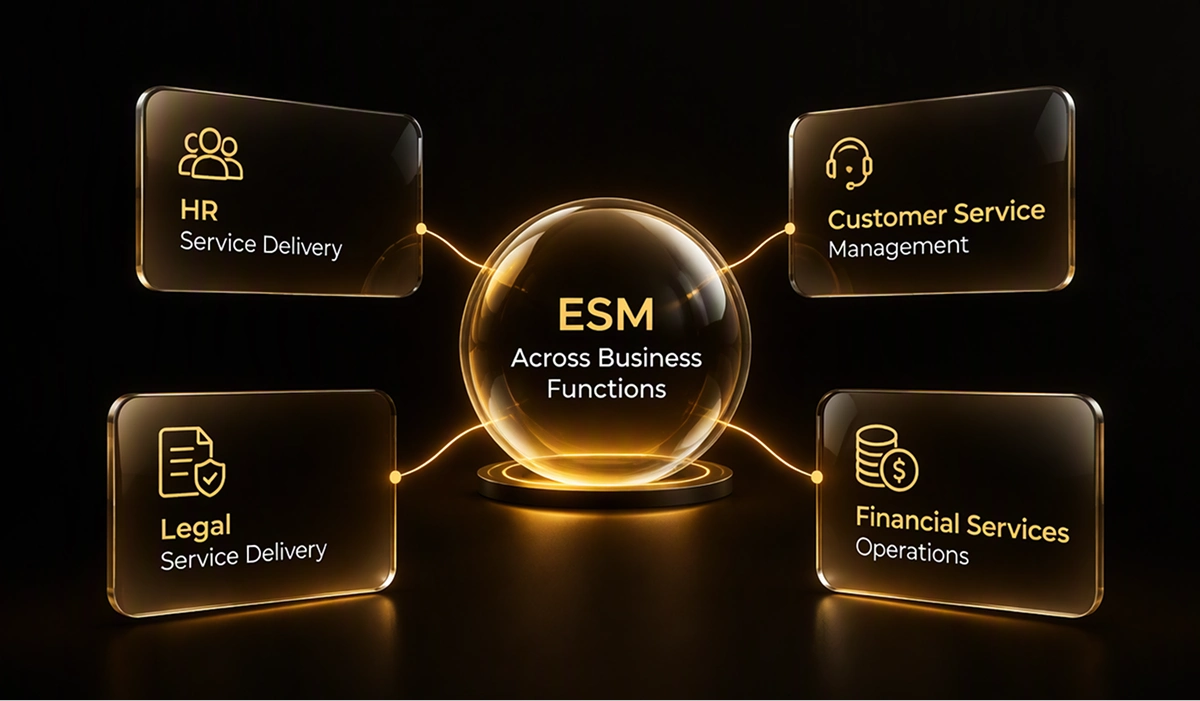
  • HR Service Delivery: Streamline onboarding journeys and employee inquiry management without manual handoffs between HR, Facilities, and IT.
  • blog detail
  • Customer Service Management (CSM): Connect frontline customer requests directly with backend operational resolution teams to reduce resolution times.
  • Legal Service Delivery: Standardize contract approvals, NDA requests, and compliance tracking while preserving security access controls.
  • Financial Services Operations: Automate invoice reconciliation, vendor onboarding, and procurement approvals within structured digital workflows.

3 Pillars of a Unified Enterprise Operating Model

blog detail

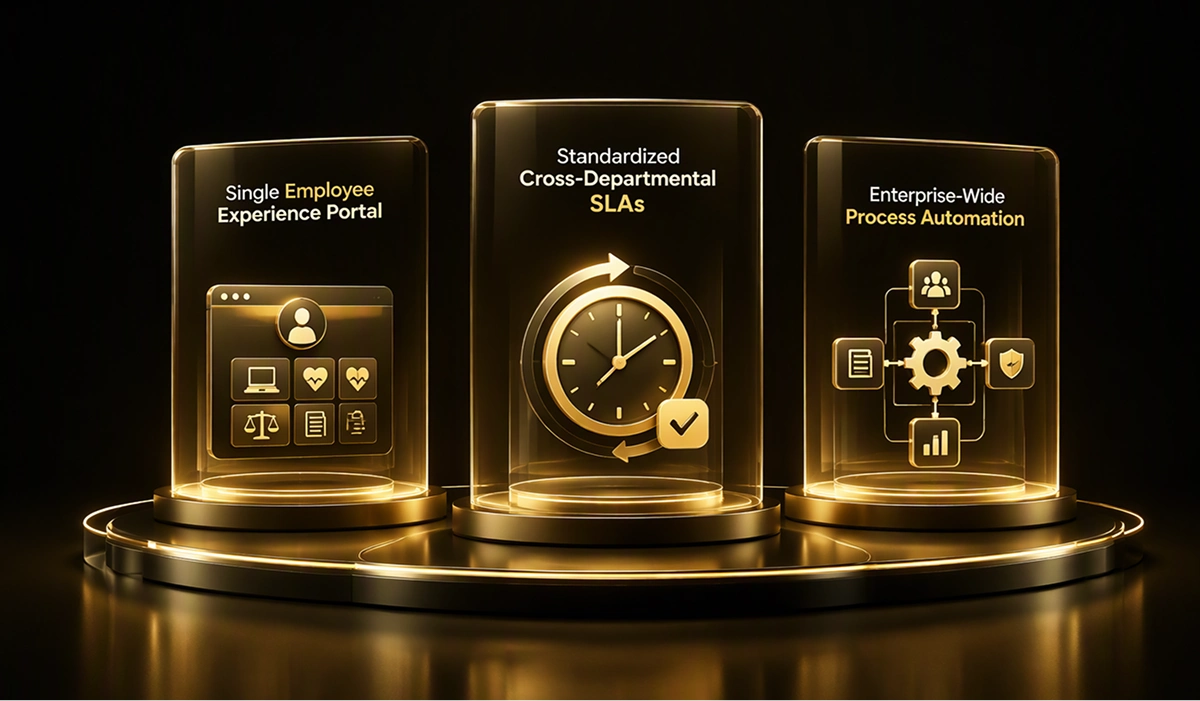
Scaling ServiceNow across non-IT business units requires a deliberate strategy built around three core capabilities:

  • A Single Employee Experience Portal:Instead of forcing employees to navigate different portals for IT equipment, HR benefits, or legal reviews, a unified portal provides a single entry point for every workplace request.
  • Standardized Cross-Departmental SLAs:Extending Service Level Agreements beyond IT ensures clear accountability, predictable turnaround times, and real-time operational tracking for every business function.
  • Enterprise-Wide Process Automation: By utilizing shared platform data and low-code workflow automation, routine approvals move across departmental boundaries automatically, eliminating manual coordination.

Conclusion

Positioning ServiceNow as a comprehensive enterprise operating model moves your organization past departmental silos and fragmented systems. Unifying HR, Customer Service, Finance, and Legal under a single workflow engine unlocks operational resilience, drives cost efficiency, and delivers a modern employee experience.

Ready to scale your platform vision beyond traditional IT boundaries?

Get In Touch

0