
As artificial intelligence shifts from isolated sandbox pilots to core operational pipelines, enterprise technology leaders face a strategic choice. Should organizations rely exclusively on out-of-the-box vendor models, or build an open ecosystem that connects existing workflow engines with external foundational models?
For enterprises running mission-critical operations on ServiceNow, the answer is clear: flexibility wins. Integrating ServiceNow with external AI/LLM platforms allows organizations to combine native workflow context, process automation, and domain-specific records with the specialized intelligence of external language models.At Mirroar, we view platform architecture not as a closed garden, but as an extensible orchestration layer. By connecting ServiceNow to leading external providers, including Azure OpenAI, Amazon Bedrock, Google Vertex AI, and specialized open-weight models, enterprises unlock custom reasoning capabilities without compromising security, compliance, or data governance.Relying on a single foundational model across every enterprise domain creates operational trade-offs. A model optimized for conversational customer support may lack the deep code-generation logic needed for IT service script automation or the localized data sovereignty required for regulatory compliance.
Connecting ServiceNow to external AI systems addresses three core operational imperatives: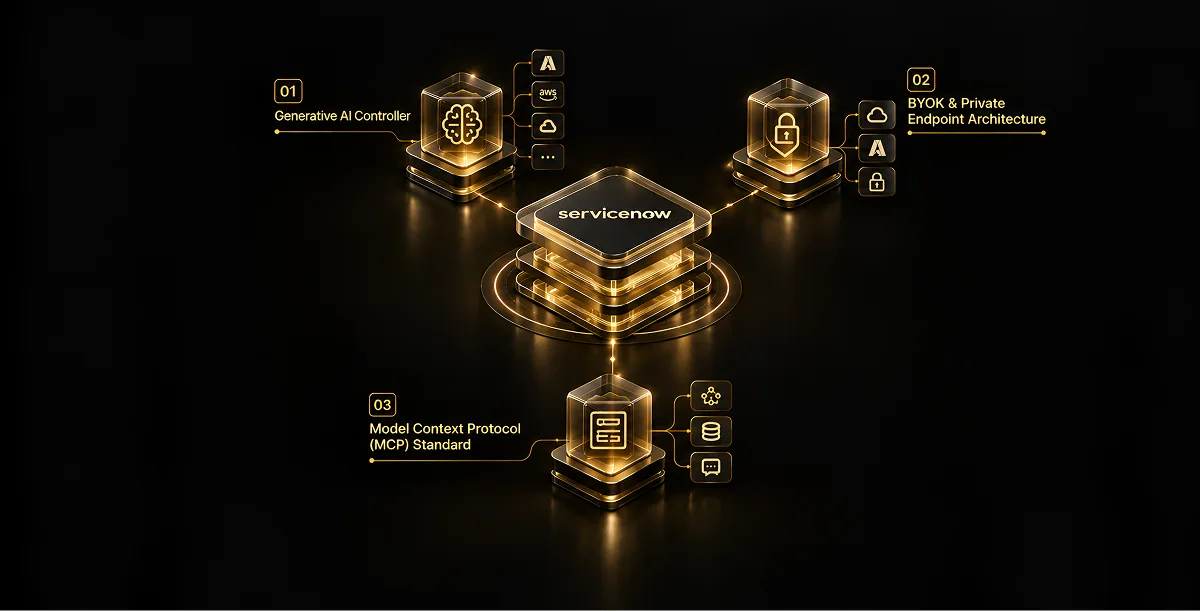
Integrating third-party generative AI engines into ServiceNow relies on an abstraction layer that standardizes request routing, payload transformation, and security enforcement. Rather than writing custom API scripts for every new model, the platform uses structured framework components to manage external intelligence securely.
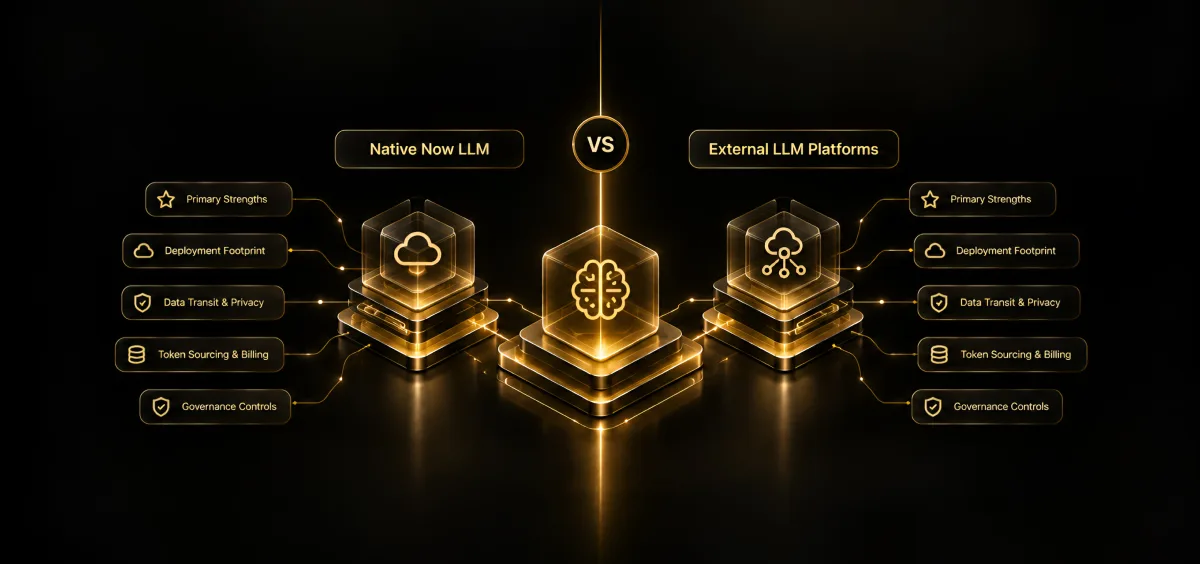
1. Generative AI Controller: The Generative AI Controller acts as the native integration fabric within the Now Platform. It provides pre-built connectors to major external providers, enabling administrators to link external API endpoints to standard workflow triggers without complex custom coding.2. Bring Your Own Key (BYOK) & Private Endpoint Architecture: To ensure data privacy, external integrations execute over encrypted REST channels or private cloud links (such as AWS PrivateLink or Azure ExpressRoute). By utilizing BYOK configurations, enterprise credentials and token consumption remain directly under internal IT control.3. Model Context Protocol (MCP) Standard: By adopting standardized protocol interfaces like MCP, ServiceNow normalizes how context, schema metadata, and prompt inputs are packaged before reaching external models. This ensures consistent output formatting across different LLM vendors.Selecting between native platform models and third-party AI engines requires evaluating specific operational, security, and financial criteria across key dimensions:
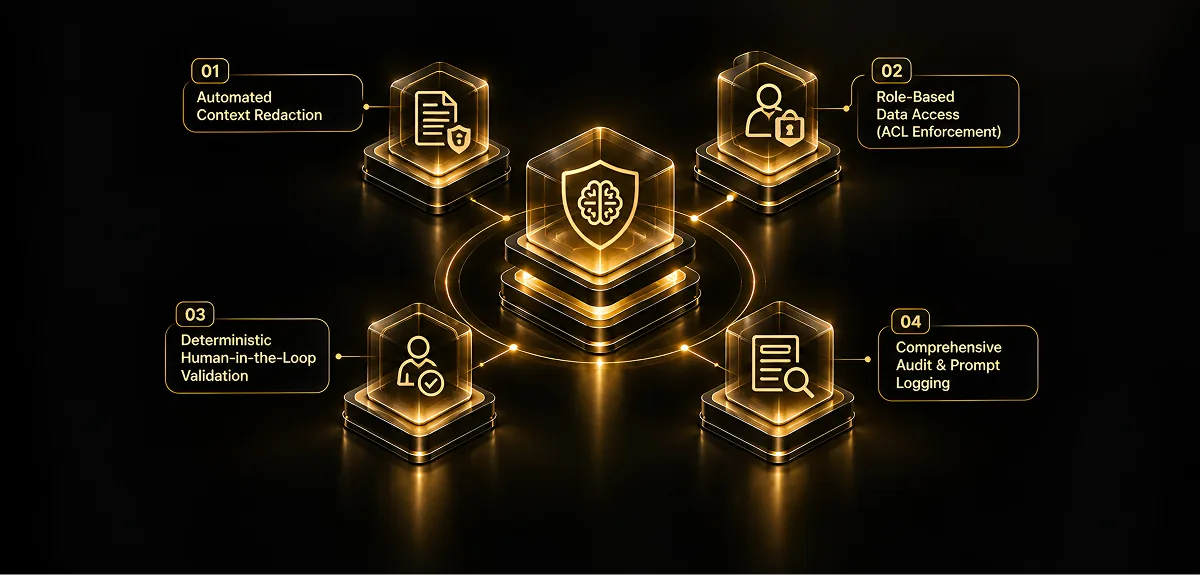
Exposing internal ServiceNow records to third-party endpoints requires strict governance to safeguard sensitive customer and employee data.
Integrating ServiceNow with external AI/LLM platforms bridges the gap between enterprise workflow orchestration and advanced third-party intelligence. By establishing a robust governance layer, automating data guardrails, and maintaining architectural flexibility, enterprise leaders can scale AI innovation safely across every department.
Ready to architect an extensible, secure AI integration strategy for your ServiceNow ecosystem? Connect with the Mirroar consulting team today to design a custom platform architecture tailored to your business needs.


